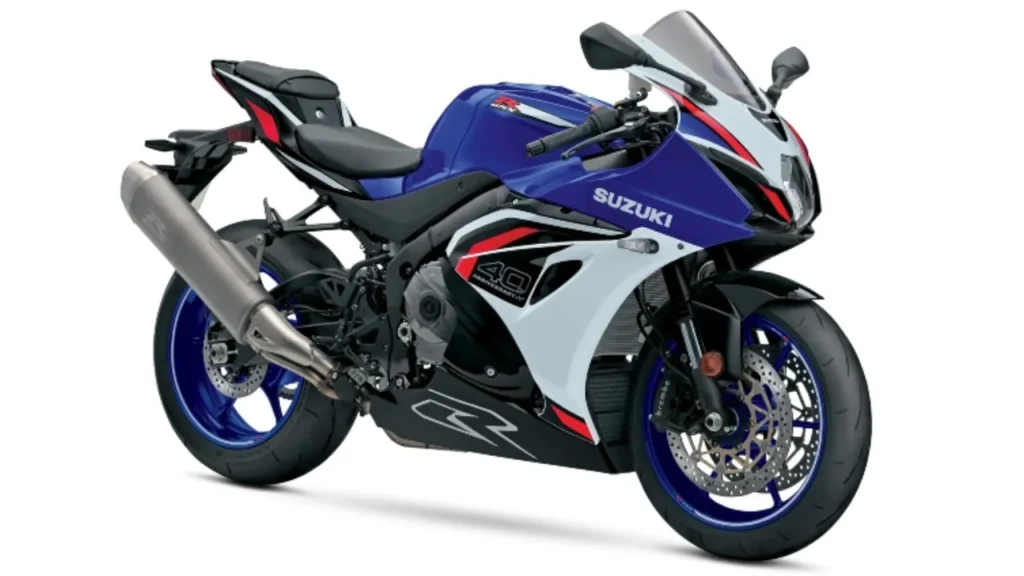
The 2026 Suzuki GSX-R1000 carries forward a legacy that has shaped the global superbike segment for more than two decades. Known for its precision engineering, mechanical reliability, and rider-focused performance, the GSX-R1000 has always stood apart in a class dominated by extreme electronics and aggressive design philosophies. Instead of chasing trends, Suzuki continues to refine what has consistently worked: balance, predictability, and authentic rider engagement.
As emission regulations tighten and technology expectations rise, the 2026 GSX-R1000 represents a calculated evolution rather than a dramatic reinvention. Suzuki’s approach remains focused on delivering usable performance without compromising the direct connection between machine and rider.
What the 2026 Suzuki GSX-R1000 Truly Represents
The GSX-R1000 has never been built to impress on paper alone. Its long-standing reputation comes from real-world performance, race-proven durability, and confidence-inspiring handling. Suzuki engineers have consistently prioritized chassis balance and throttle predictability, making the motorcycle approachable for experienced riders while remaining highly capable on the track.

For the 2026 Suzuki GSX-R1000, the emphasis appears to be on refinement. Instead of overloading the bike with unnecessary complexity, Suzuki is expected to improve efficiency, meet stricter emission standards, and subtly enhance rider assistance systems. The goal remains clear: preserve the GSX-R’s mechanical character while ensuring it remains competitive in a modern superbike market.
2026 Suzuki GSX-R1000 Engine and Performance Expectations
Powering the 2026 model is expected to be Suzuki’s well-known 999cc inline-four engine, updated to comply with upcoming Euro 5+ emission requirements. Rather than pursuing radical redesigns, Suzuki is likely focusing on optimizing combustion efficiency, thermal management, and long-term reliability.
The engine is expected to retain Suzuki’s Variable Valve Timing (VVT) system, which plays a crucial role in delivering strong mid-range torque without sacrificing top-end performance. This setup allows the GSX-R1000 to feel responsive on public roads while remaining explosive at higher revs on the racetrack.
Design and Aerodynamic Refinements
The 2026 Suzuki GSX-R1000 design is expected to receive subtle yet meaningful aerodynamic and visual updates inspired by Suzuki’s racing experience. While the iconic GSX-R silhouette is likely to remain intact, sharper body lines and improved airflow management should enhance both high-speed stability and cooling efficiency.
One of the most anticipated upgrades is the expected introduction of a full-color TFT instrument cluster. This display would provide clearer ride information, customizable layouts, and potential smartphone connectivity. Such an update would modernize the cockpit without compromising usability or rider focus.
2026 Suzuki GSX-R1000 Expected Specifications
- Engine: 999cc inline-four with refined VVT system
- Maximum Power: Approximately 205 hp
- Peak Torque: Around 118 Nm
- Electronics: Multiple ride modes, traction control, wheelie control, cornering ABS
- Display: Full-color TFT digital console
- Frame: Lightweight aluminum twin-spar frame
- Suspension: Showa Balance Free Front forks with adjustable rear monoshock
- Brakes: Brembo dual front discs with radial-mounted calipers
- Estimated Wet Weight: Around 202 kg
Why the GSX-R1000 Still Stands Out in 2026
In a segment increasingly dominated by aggressive electronics and complex rider aids, the GSX-R1000 continues to appeal to riders who value feedback, stability, and control. Suzuki’s philosophy ensures that electronic systems support the rider rather than dominate the experience.
This balance makes the motorcycle especially rewarding for skilled riders who enjoy pushing limits through technique rather than relying solely on software intervention. High-speed stability, predictable cornering behavior, and linear power delivery remain defining traits of the GSX-R platform.
Expected Launch Timeline
The 2026 Suzuki GSX-R1000 is expected to make its global debut between mid and late 2025, potentially showcased at major international motorcycle exhibitions. Global sales are likely to begin in early 2026.
In markets such as India, availability may extend to mid-2026 due to homologation and import processes. Suzuki may also consider introducing a limited or performance-focused variant alongside the standard model.
Expected Price Range
With refined technology, improved aerodynamics, and compliance with stricter emission standards, the GSX-R1000 is expected to remain competitively priced within the liter-class segment.
- Estimated Global Price: USD 19,000 – 21,000
- Estimated India Price: ₹22 – 25 lakh (CBU)
This pricing positions the GSX-R1000 as a strong value proposition for riders seeking a high-performance superbike without entering ultra-premium pricing territory.
Final Verdict
The 2026 Suzuki GSX-R1000 represents a refined evolution of a legendary superbike. By focusing on improved efficiency, modernized technology, and aerodynamic enhancements—while preserving its mechanical soul—Suzuki continues to honor the GSX-R legacy.
For riders who prioritize balance, control, and an authentic racing character over excessive complexity, the upcoming GSX-R1000 remains a compelling and credible choice in the global superbike landscape.


Hi, I’m Hussain, the author and editor behind Propfits. I created this website to share straightforward and trustworthy information about smartphones and automobiles. I enjoy researching new launches, comparing features, and breaking down complex details into simple language that anyone can understand.